Energy Conservation Techniques for EDS and Chronic Fatigue
Understanding the multiple physical mechanisms behind chronic fatigue changes how to manage it.
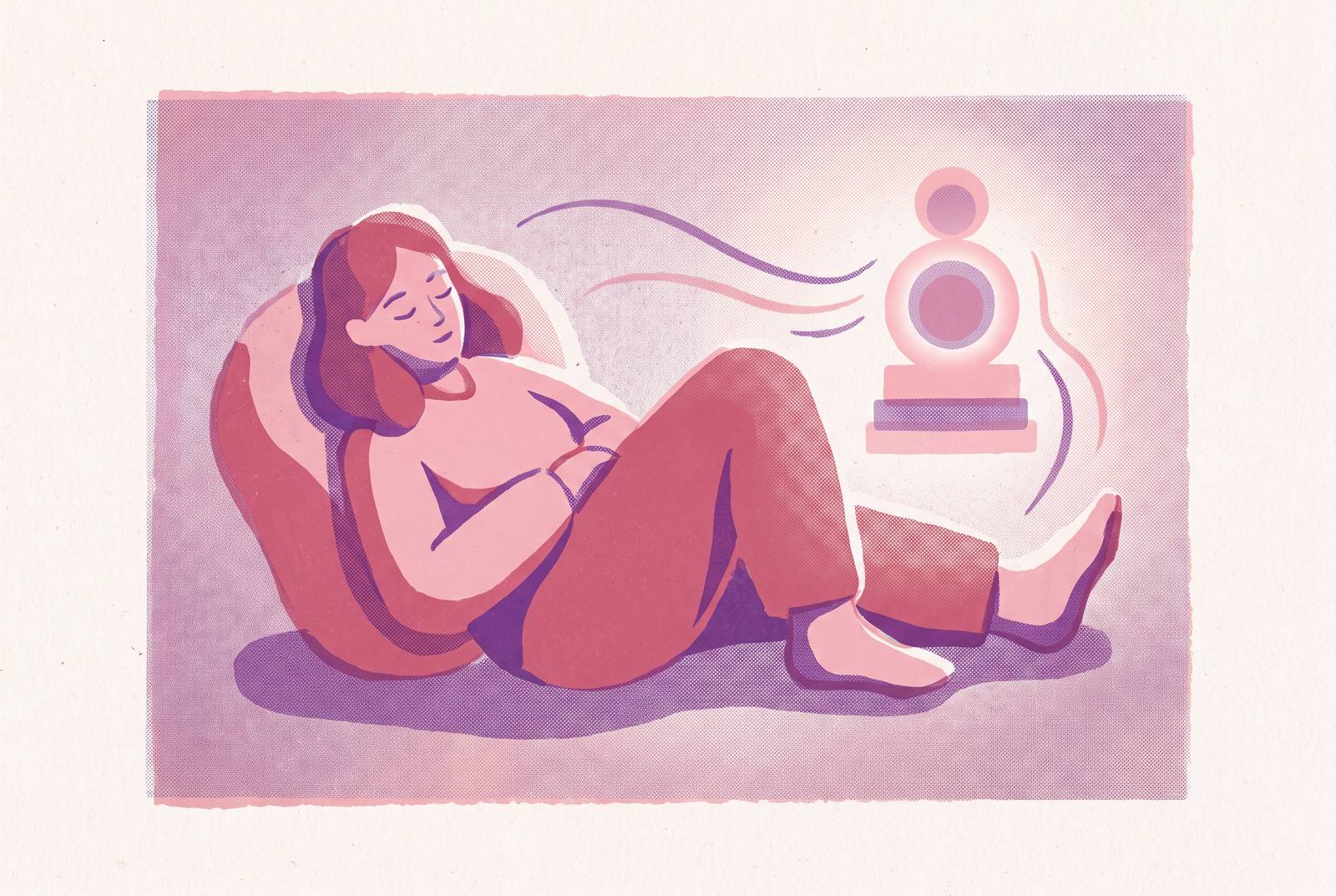
Chronic fatigue in hEDS isn't tiredness. It doesn't clear with a nap, it doesn't clear with eight hours of sleep, and it doesn't respond to the usual "get some rest" advice that works fine for everyone else. Members of Jeannie Di Bon's Zebra Club community describe it as "an absolute physical weight," or "layers of mind fatigue and body fatigue, always there." One member called it "an inability to function that is completely unlike tiredness." That distinction points to a mechanical problem, not a mood problem, rooted in the physiological disruptions that characterize the condition.
The numbers back up what those descriptions suggest. The study analysis referenced in Di Bon's work found that roughly three-quarters of EDS patients report dealing with severe fatigue. A separate survey of people with joint hypermobility syndrome or hEDS found that 80% reported significant fatigue, putting it right up there with pain as one of the most common symptoms of the condition. An analysis of the IMM study using Di Bon's Strengthen Your Hypermobile Core series found fatigue and pain to be the two biggest barriers to movement.
Most advice on chronic fatigue treats it as one dial to turn down. That model is wrong for hEDS, and clinging to it is why so many people burn out on energy conservation before it has a chance to work. Fatigue here comes from several mechanisms running at once. Name them first, before reaching for fixes, or the fixes won't hold.
The compounding mechanisms that drain energy in hEDS
Fatigue in hEDS is a stack of problems, each one feeding the others. A narrative review by Hakim and colleagues, published through Physio Network, lays out the main contributors.
Dysautonomia, including POTS, is near the top of that list. When the body can't regulate blood flow properly, tissues, including the brain, don't get enough oxygen during upright activity, and that shortfall causes both muscular fatigue and the cognitive fog patients describe. Poor sleep compounds it: pain, nocturnal tachycardia, sleep-disordered breathing, and nighttime bathroom trips all interrupt rest, so sleep happens but nothing gets restored. Physical deconditioning adds a feedback loop of its own. Fatigue cuts activity, less activity worsens deconditioning, and a deconditioned body burns more energy to do the same task it used to handle without a thought. Chronic pain from repeated joint injuries sits on top of all this, tiring the body directly and wrecking sleep in the process. Allergies, food intolerances, nutritional gaps, and the weight of anxiety and depression round out the list, each one both a symptom and a driver of the fatigue itself.
Di Bon's clinical work adds two mechanisms that don't always make the formal lists but matter just as much day to day. The first is a lack of postural tone and whole-body organization: bodies with hEDS spend real energy simply staying upright, energy other people don't have to spend. The second is bracing, the instinctive muscle-clenching many hypermobile people do to fake joint stability. Bracing costs energy and gets in the way of normal breathing, which compounds the fatigue further.
One study, cited in Di Bon's analysis, identified the top predictors of fatigue severity in hEDS: extent of joint hypermobility, orthostatic dizziness tied to heat and exercise, level of social participation, physical activity, and dissatisfaction with diagnosis and access to management options. A systematic review published in Musculoskeletal Care found no specific treatment protocol exists for EDS or hEDS fatigue, and the evidence behind existing management techniques stays thin. That gap puts the burden on patients to map their own driver profile, because no standard playbook is coming to do it for them.
Once fatigue looks like a multi-driver system instead of a single dial, "just rest more" stops making sense as advice. What's needed instead is conservation built around the specific mechanisms doing the damage.
A large share of people managing hEDS fatigue are also managing something that behaves exactly like post-exertional malaise, or PEM, even if no clinician has ever used that term with them.
Long COVID tightens the connection further. A study cited in Di Bon's review found that generalized joint hypermobility made people 30% more likely not to fully recover from COVID-19, with fatigue acting as the link between hypermobility and Long COVID outcomes.
PEM is a worsening of symptoms after physical or mental exertion, out of proportion to the effort involved, and it can last days or weeks after the triggering activity. That delayed, disproportionate crash is what separates PEM from ordinary tiredness, and defining it precisely changes the whole approach to energy management.
It also flips the logic of pacing on its head. A "good day," one where energy feels higher than usual, is a trap, not a gift: pushing through it can trigger a crash that costs far more than whatever got accomplished. Conservation, under this model, means staying inside a stable energy envelope that keeps PEM from firing in the first place, not resting more in total. Guidance from health bodies has proposed pacing and self-management approaches for post-COVID patients dealing with PEM along similar lines. None of that research was built for hEDS, but the mechanism it targets, PEM, occurs in this population too, so the guidance transfers directly.
Spoon theory and the energy envelope as planning frameworks
Christine Miserandino's spoon theory gives chronic illness patients a way to talk about energy that non-patients can actually grasp. Every task, getting dressed, cooking dinner, holding a conversation, costs a spoon. Once the spoons for the day are gone, they're gone. No amount of willpower brings more.
Its real value is communicative. Spoon theory hands people language to explain invisible limits to family, employers, and clinicians who've never dealt with fatigue that sleep doesn't touch. No peer-reviewed research has tested spoon theory as a pacing method, and it shouldn't be mistaken for one. Treat it as a conceptual shortcut for conversation.
Energy envelope theory covers similar ground with more structure, and it's the more useful of the two frameworks for actually planning a day. It targets both overexertion and underexertion, since doing too little causes its own problems, deconditioning chief among them. The goal is operating consistently inside whatever capacity actually exists that day, not the capacity from last week or the capacity hoped for tomorrow. Over time, staying inside that envelope can let it expand gradually, but any expansion has to happen slowly, and any return of PEM means pulling back immediately, not pushing through out of frustration.
Together, these two frameworks change how a day gets planned. Instead of reacting moment to moment to how the body feels, energy gets allocated in advance, the way a budget allocates money before the paycheck lands. Cut daily activity back to a level where PEM doesn't occur, then build upward slowly, watching for any return of symptoms as the signal to step back down.
Technique one: managing dysautonomia and the physical environment
Dysautonomia, POTS included, is one of the biggest energy drains in hEDS, because impaired blood-flow regulation starves tissues, including the brain, of oxygen during anything upright. Fixing this starts with the physical environment, not with medication alone, and that order matters because environmental changes are the part a patient controls today, this afternoon, without waiting on a referral.
Compression garments, socks or sleeves, help manage blood pooling and support circulation, which matters directly for anyone with POTS as a comorbidity. Hydration works alongside that: staying well-hydrated supports blood pressure and cuts down on the dizziness and fatigue that orthostatic issues cause, especially since those issues get worse in heat and after exercise.
Positioning choices add up over a day. Doing tasks seated instead of standing cuts the orthostatic load substantially. A shower chair removes the energy cost of standing through an entire shower routine. Raising the head of the bed slightly can reduce nocturnal tachycardia, which then helps the sleep quality that's already under strain from other directions. Heat sensitivity deserves its own attention too, since orthostatic dizziness tied to heat and exercise is among the identified predictors of fatigue severity in hEDS: scheduling demanding tasks for cooler parts of the day, or cooler rooms, avoids stacking heat on top of an already taxed system.
None of this replaces a conversation with a clinician about medication or formal treatment. These are environmental adjustments that support, but do not substitute for, medical care.
Technique two: joint protection, adaptive equipment, and reducing the hidden energy cost of stability
Holding a hypermobile body upright takes work that most people never have to think about. Di Bon's clinical observations point to a lack of postural tone and whole-body organization as a real, if invisible, energy cost: the body works constantly just to stay organized in space. Bracing, the instinctive muscle-clamping many people use to stabilize loose joints, adds to that cost and disrupts breathing at the same time, compounding the fatigue in a way nobody watching from outside would ever notice.
Low-impact exercise helps offset this over time, and it remains a more sustainable long-term strategy than inactivity alone, even though it feels backward when someone's already exhausted. Swimming, Pilates, and recumbent cycling all build the muscles around joints, and stronger supporting muscle reduces the passive energy cost of staying stable throughout the day. Custom braces and splints do similar work more directly, supporting joints during specific tasks rather than building strength for the long haul.
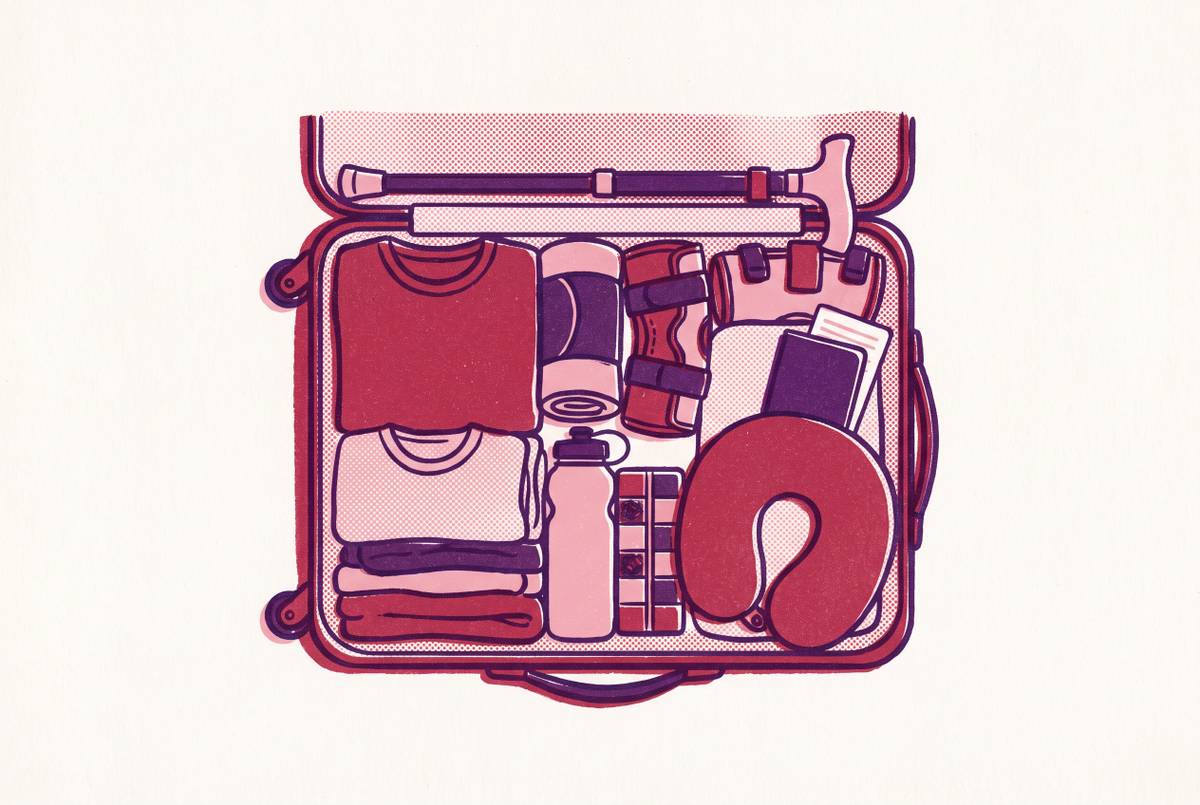
Adaptive equipment cuts down the force and stabilization effort that routine tasks otherwise demand: jar openers, reachers, ergonomic kitchen tools. Mobility aids, a walking stick, a wheelchair, belong in the same category. Treating them as a last resort or an admission of defeat costs people years of unnecessary depletion they didn't need to sit through. They're an energy conservation tool, reducing the cost of movement so the spoon budget stretches further across the day.
Workplace and study adjustments follow the same logic. Assistive tools and scheduling adjustments can reduce the physical demands of knowledge work. Frequent, planned breaks built into a schedule prevent gradual depletion, which otherwise sneaks up during a long, uninterrupted stretch of work.
Technique three: sleep hygiene calibrated to EDS-specific disruption
Sleep in hEDS doesn't fail because of bad habits. It fails because of specific physiological interruptions: pain that wakes people mid-cycle, nocturnal tachycardia, sleep-disordered breathing, nighttime bathroom trips. Standard sleep hygiene advice, the kind aimed at people whose main problem is scrolling their phone too late, falls flat here more often than it helps, because the root causes are structural. Treating this as a discipline problem just adds guilt on top of exhaustion, and that guilt helps nobody.
Still, some standard sleep hygiene practices help even when they can't fix the underlying issue. Avoiding stimulants and large meals close to bedtime, keeping consistent sleep and wake times even on the worst-energy days, and reserving the bed for sleep alone, not screens, not work, all reduce friction around falling and staying asleep. Positioning pillows to support joints can cut down on pain-related waking, putting joint protection and sleep quality in direct overlap.
Nocturnal tachycardia and sleep-disordered breathing deserve clinical evaluation. Those aren't things a better pillow solves, and no amount of pillow arrangement will fix a racing heart at 3 a.m. Cutting down on disrupted nights preserves more of whatever energy reserve exists, and that reserve is what carries into the next day's activities.
Technique four: structured activity pacing in daily practice
Pacing gets mistaken for resting more, and that mistake wastes the whole strategy. Pacing means balancing activity and rest carefully enough to avoid triggering PEM, while still doing enough to dodge deconditioning, the opposite trap waiting on the other side.
In practice, that means breaking tasks into smaller pieces with rest built in between them. Folding laundry in short bursts instead of one long session is a small example of a much bigger principle. It also means resisting the good-day trap: feeling better on a given morning doesn't mean capacity actually went up, and consistent limits should guide behavior no matter how any single day happens to feel. Planning ahead for known exertion, a medical appointment, a social event, a demanding work week, beats waiting to recover from the crash afterward. Cutting activity down before and after the event, rather than pushing through and hoping for the best, keeps the whole system more stable. And if PEM symptoms occur after increasing activity levels, the right move is dropping back to the previous level immediately, not waiting around to see if it passes.
The Packer Managing Fatigue Group Program, known as MFGP, has the strongest evidence base in this field, and it should be the starting point rather than one option weighed equally against the rest. A systematic review by Kim and colleagues found that seven of ten energy conservation studies were built on the MFGP framework, which makes it the most well-supported intervention available, even though it was developed originally for multiple sclerosis and post-polio populations rather than hEDS specifically. The mechanism, not the original diagnosis it was tested on, is what makes it transfer.
The RECOVER-ENERGIZE trial, in its Arm B branch, studied structured pacing as a clinical intervention for PEM in post-COVID patients, with a primary completion date set for August 2025. That trial signals the evidence base for pacing keeps growing, even without hEDS-specific studies yet to point to directly.
Activity diaries tie all of this together. Clinicians recommend logging daily activities alongside symptoms to establish a real baseline, spot patterns, and adjust pacing targets as capacity shifts over time. That log becomes the raw material for the next step: figuring out what's actually driving the fatigue on any given day.
Tracking symptoms and energy to find personal patterns
Fatigue in hEDS shifts by day, by season, by activity level, and by how multiple drivers happen to collide on a given afternoon. A diary only earns its keep once it starts revealing patterns instead of just logging bad days one after another.
Tracking fatigue alone misses the point, and it's the mistake most people make when they first start a log. What matters is tracking it alongside sleep quality, pain levels, the type and duration of activity, food and hydration, orthostatic symptoms, and emotional state, because that context is what explains why energy dropped on a Tuesday and held up fine on a Wednesday. Validated fatigue questionnaires, the Fatigue Severity Scale, the Fatigue Impact Scale, the Brief Fatigue Inventory, the Multidimensional Assessment of Fatigue, give patients a way to measure change over time instead of just describing how things feel in the moment.
That shift hands a clinician something concrete to act on. Moving from "I feel tired all the time" to "my fatigue spikes the day after standing for more than 20 minutes, and I haven't slept through the night in two weeks" changes what a doctor's appointment can accomplish. Wearable data, activity levels, heart rate, sleep stages, adds an objective layer on top of that subjective record, which counts for a lot given how central heart rate elevation and dysautonomia are to the whole picture.
Bringing symptom logs, wearable data, and pattern recognition into one place cuts down the administrative load of tracking, and that matters because the person doing the tracking is already working with limited cognitive and physical energy to spend on it. The point of all this record-keeping is a clearer picture of the specific mechanisms driving fatigue on any given day. That's where the whole approach started, and that's where it keeps returning.