EDS and the Autonomic Nervous System
Connective tissue defects trigger three distinct pathways of autonomic dysfunction.
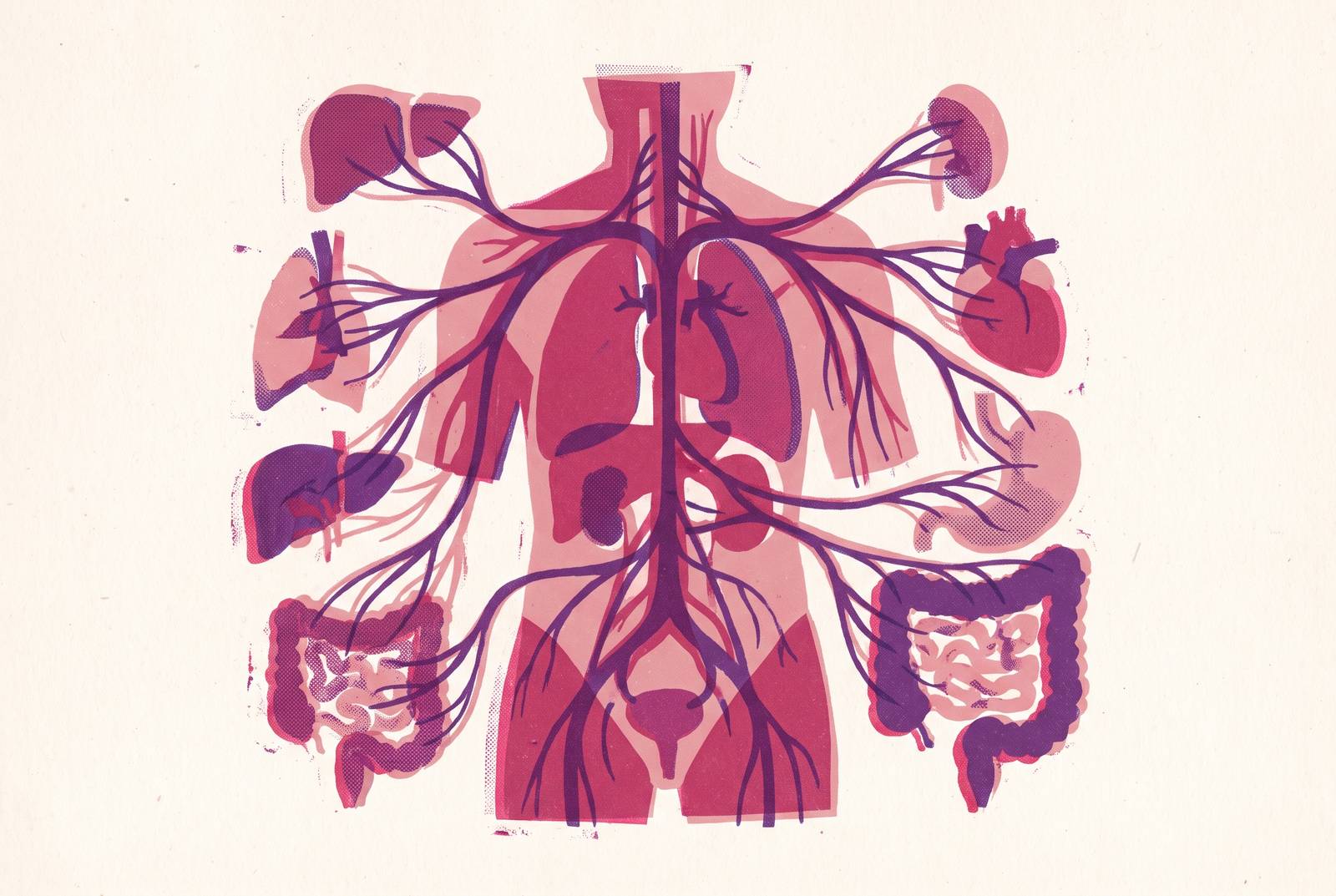
Ehlers-Danlos syndrome is a group of hereditary connective tissue disorders, 13 subtypes recognized in all, and the hypermobile type (hEDS) is by far the most common, thought to affect roughly 1 in 500 people. What gets missed constantly, in clinics and in casual conversation alike, is that hEDS doesn't stop at joints and skin. Connective tissue holds together blood vessels, nerves, and the gut wall too, and every one of those structures depends on the autonomic nervous system to function. So when that tissue is faulty, the ANS doesn't stay untouched. The dizziness, the racing heart, the GI chaos, the bone-deep fatigue that so many hEDS patients report aren't a random pile of unrelated complaints. They're downstream of the same structural problem, showing up in a different organ system each time.
When someone with hEDS stands up, gravity pulls blood into the legs and abdomen because the connective tissue in vessel walls is too loose to maintain normal vascular tone. The brain registers the drop in blood flow and the autonomic nervous system responds with a sympathetic surge, releasing adrenaline to force the heart to beat faster and the vessels to constrict. That surge is what produces the racing pulse and the wave of nausea. The connective tissue disorder and the autonomic dysfunction are not two separate problems running in parallel: the same faulty tissue that loosens joints and skin also weakens blood vessels, and small fiber neuropathy layered on top of that vascular instability means the thin nerve fibers that help regulate those vessels are damaged too, compounding the dysregulation further.
Why does faulty connective tissue cause a racing heart and nausea when standing?
Three mechanisms come up again and again in the research, and none of them rule out the others.
The first is venous pooling. Blood vessel walls contain connective tissue, and when that tissue is loose or weak, the vessels lose tone. Stand up, and gravity pulls blood down into the legs and abdomen instead of keeping it circulating toward the brain. The brain notices the drop in blood flow and the ANS answers with a sympathetic surge, dumping adrenaline to force the heart to beat faster and the vessels to clamp down. That surge is what produces the racing pulse, the shakiness, the wave of nausea on standing.
The second is mechanical: compression of the vagus nerve. The vagus is the 10th cranial nerve and the longest parasympathetic nerve in the body, running from the brainstem down through the neck and chest. Craniocervical instability, common in hEDS because the ligaments that should stabilize the upper spine are too lax, can compress or stretch that nerve. Given how much territory the vagus covers, damage there ripples outward into heart rate control, digestion, and breathing all at once.
The third is small fiber neuropathy, damage to the thin nerve fibers that carry pain and temperature signals and help regulate blood vessels. A 2025 study in Autonomic Neuroscience found that the majority of hEDS participants reported pain, and those who also had dysautonomia showed impairment in C-fibers on top of the more commonly seen A-delta fiber loss. The takeaway from that paper: dysautonomia and vascular dysfunction in hEDS seem to get worse in step with small-fiber damage, not separately from it.
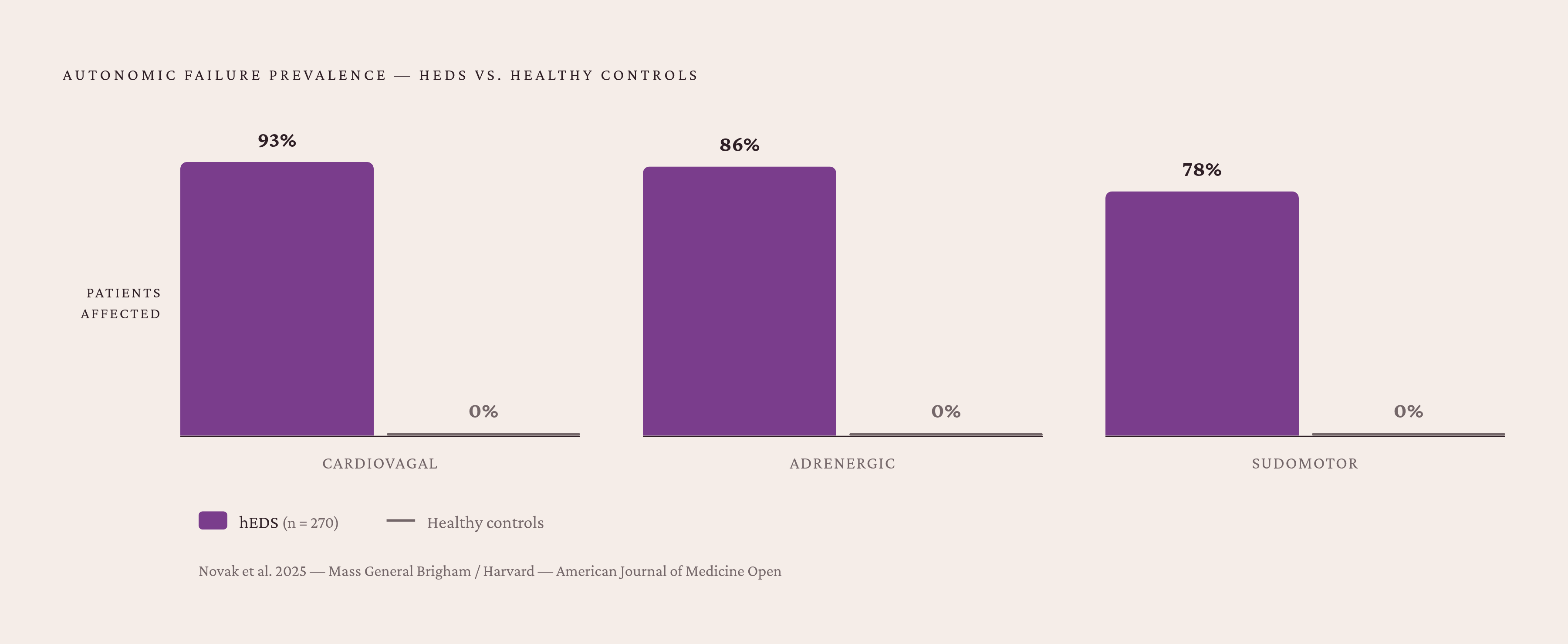
A 2025 study out of Mass General Brigham and Harvard (Novak et al., published in the American Journal of Medicine Open) looked at 270 hEDS patients and found something striking: reduced blood flow velocity to the brain on standing, frequent small fiber neuropathy, and autonomic failure that was widespread but usually mild rather than severe. The number that stands out most: autonomic failure showed up in nearly all hEDS patients and in zero healthy controls, with all three autonomic domains affected, cardiovagal, adrenergic, and sudomotor.
There's also a newer thread worth flagging: 2025 proteomics research in hEDS found reduced levels of complement proteins, part of the immune system, hinting at an autoimmune layer to the connective tissue story that hasn't been fully mapped yet. None of these three pathways, vascular, neurological, or immune, cancels out the others. They likely feed into each other. And it bears saying plainly: the exact mechanics are still being worked out. The evidence base is growing fast, but it isn't settled science yet.
The full scope of autonomic symptoms in hEDS, from the most common to the least recognized
The scale here is not subtle. A 2026 letter by Blitshteyn and Miller, published in the American Journal of Medicine Open in response to the Novak findings, reported clinically significant autonomic symptoms in nearly all hEDS patients, compared with zero in healthy controls, and across every domain measured.
Those domains break down into a few recognizable clusters. Orthostatic symptoms, lightheadedness, near-fainting, actual fainting, are the single most common complaint in the Novak data. Sudomotor symptoms cover abnormal sweating and trouble regulating body temperature. Vasomotor issues show up as blood pressure swings and flushing. Then there's the gut: nausea, bloating, constipation, and slow gastric emptying are all part of the picture, alongside urinary and other genitourinary symptoms.
None of this happens in a vacuum. Eating a meal (which triggers vasodilation), exercising, or just getting overheated can all set these symptoms off. That's not coincidence or bad luck, it's the ANS reacting the way a dysregulated ANS reacts.
Kids aren't spared. One study of 70 children and young adults with hEDS (mean age 15.8, 89% female) found that 59% had orthostatic intolerance, 47% had some form of dysautonomia, and 21% met criteria for POTS specifically. Nearly all of them, 92.9%, had two or more cardiovascular symptoms. And tachycardia in that group tracked closely with worse autonomic symptom scores. Yet 82% of these same pediatric patients had a completely normal heart structure on echocardiogram. The heart looks fine on imaging. The dysfunction is in how it's being regulated, not in how it's built, and that distinction should shape how these kids get worked up in the first place.
Fatigue deserves its own mention here, because it usually gets waved off as a side effect of pain or bad sleep. Increasingly, researchers are treating autonomic dysfunction itself as a direct driver of fatigue in hEDS, not just a downstream nuisance. Given how wide this symptom list runs, orthostatic, sudomotor, vasomotor, GI, urinary, fatigue, it's not hard to see why so many of these patients get told their symptoms don't add up to anything real. They add up. The list above is the addition.
POTS: the most documented autonomic condition in hEDS and what the data show
Postural orthostatic tachycardia syndrome, POTS, is defined by a heart rate increase of more than 30 beats per minute in adults (more than 40 bpm in teenagers) while upright, without a corresponding drop in blood pressure. It's estimated to affect roughly 1 in 100 teenagers, which makes it common, not some rare footnote.
Among people with hEDS or hypermobility spectrum disorder, up to 70% report some dysautonomia symptoms, and up to 40% meet full diagnostic criteria for POTS, according to data cited by Mayo Clinic. One analysis found that people with hEDS are 29.7 times more likely to receive a POTS diagnosis than the general population. That's not a marginal association, that's a number that should change how clinicians think about hypermobile patients with cardiovascular complaints.
The relationship runs in both directions, too. A 2020 study of 91 POTS patients found 31% met full clinical criteria for hEDS, with another 24% showing generalized joint hypermobility without meeting every hEDS criterion. In pediatric POTS specifically, a March 2021 study of 362 patients found 22.7% had EDS and 39.0% had hypermobility spectrum disorder. And POTS itself skews heavily female: one registry study of 500 POTS patients found a mean age of 31.3 and 86.8% women. POTS shows up in about five times as many women as men, and that female skew tracks closely with the EDS connection.
The mechanism traces back to the same vascular story from earlier: weak connective tissue in vessel walls leads to pooling, pooling reduces blood flow to the brain, and the ANS compensates with sympathetic overdrive, tachycardia. Researchers have noted that ANS dysfunction and connective tissue weakness likely interact in ways that compound each other over time. Given how tight this link is, Blitshteyn and Miller argued in their 2026 paper that anyone presenting with autonomic dysfunction should get screened for hEDS or HSD using the Beighton score, a simple hands-on joint exam that takes a few minutes and requires no special equipment.
The EDS-POTS-MCAS overlap: what the evidence actually supports and where uncertainty remains
EDS, POTS, and Mast Cell Activation Syndrome (MCAS) show up together often enough that clinicians have started calling it "the trifecta." Each condition can exist on its own, but the overlap between them shows up too consistently to treat as coincidence.
MCAS involves mast cells, immune cells that live inside connective tissue and release histamine and other chemicals when triggered. Altered collagen in hEDS may change the physical and chemical environment those mast cells sit in, making them more prone to firing off inappropriately. That gets you flushing, hives, GI distress, and histamine overload.
An analysis of more than 37,000 patients found that close to 1 in 3 people diagnosed with MCAS also carried an hEDS diagnosis. Among hEDS patients, 38% met criteria for POTS, and among those under 25, that number jumped to 72%. Separately, 42% of POTS patients with allergic or GI symptoms showed abnormalities in mast cell mediators.
There's a real treatment signal buried in here too. A 2025 study in Frontiers in Neurology found that 82% of POTS patients treated with MCAS-targeted therapy responded well at an average follow-up of 33 months, including a good number who never met strict lab criteria for MCAS in the first place. That's worth sitting with.
Still, most of the research linking all three conditions relies on studies that are small, retrospective, or built on older diagnostic standards, and rigorous simultaneous confirmation of all three remains elusive. Most of the supporting research is small, retrospective, or built on older diagnostic standards. So the honest read is this: the overlap is real and clinically useful, but it doesn't mean every hEDS patient is quietly running all three conditions at once. It means these systems interact, and that interaction deserves attention, not that a diagnosis of one guarantees the others.
The broader comorbidity burden: how autonomic dysfunction compounds an already complex condition
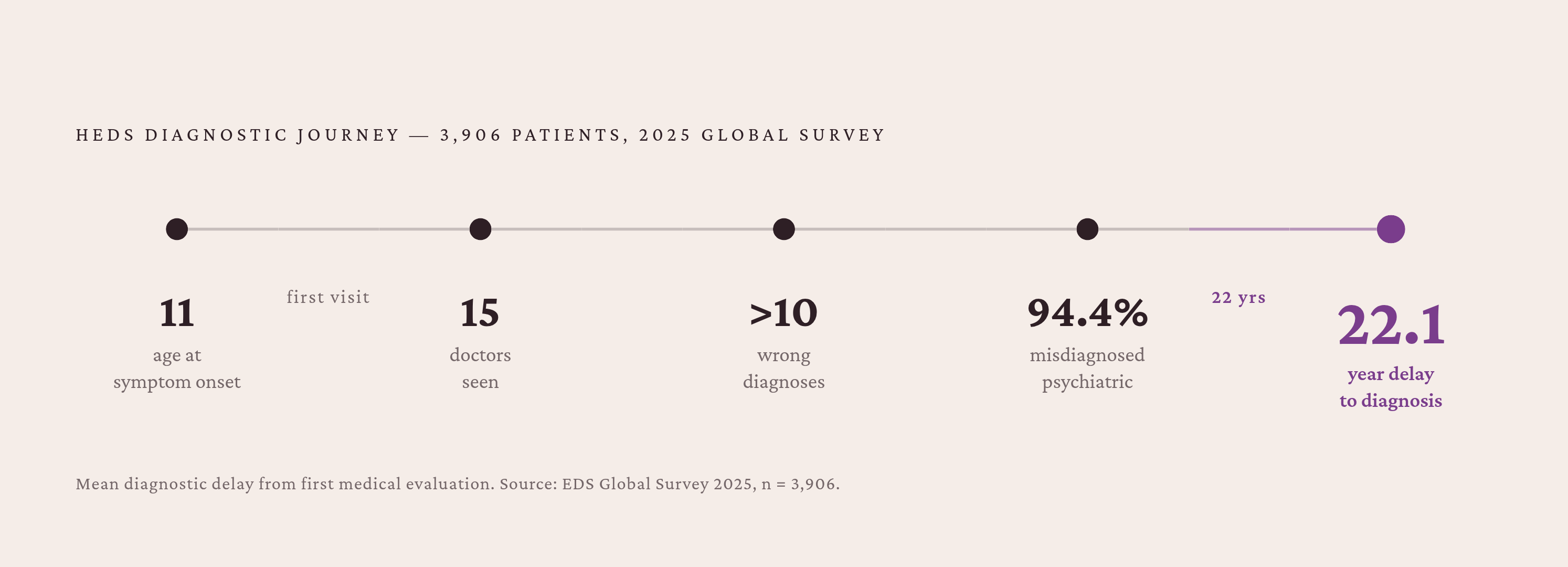
A 2025 global survey of 3,906 participants, data gathered between September 2023 and March 2024, found that hEDS patients reported a mean of 24 comorbid conditions each. The average gap between symptom onset and actual diagnosis ran 22.1 years.
Within that same survey, GI disorders showed up in 84.3% of respondents, dysautonomia in 71.4%, and chronic pain in a near-universal 98.9%. Dysautonomia isn't some rare add-on here, it ranks among the most commonly reported comorbid conditions in the largest hEDS survey conducted to date.
Symptoms tend to start young, average onset age 11, but the road to diagnosis is brutal: more than a decade on average from first medical evaluation to an actual hEDS diagnosis, with some patients enduring waits far longer than the mean. Along the way, patients see an average of 15 doctors and pick up more than 10 other diagnoses, some of which turn out to be wrong.
A retrospective chart review of 429 hEDS patients, published in May 2025, found that 94.4% had previously been misdiagnosed with a psychiatric illness. Most were told, in one form or another, that their symptoms were imagined or attention-seeking. Autonomic symptoms are especially vulnerable to that kind of dismissal: dizziness, palpitations, fatigue, and GI trouble are invisible on the outside and they fluctuate, which makes them easy for a skeptical clinician to wave off as psychological rather than physiological.
The EDS Society's Road to 2026 Committee is currently working on updated diagnostic pathways and treatment guidelines aimed at helping clinicians identify EDS and HSD subtypes and manage the conditions that ride alongside them, including autonomic dysfunction. Those updates are expected but not yet published. Worth noting too: hEDS shows up predominantly in women, as registry data consistently show a strong female skew, a demographic that already faces more medical skepticism walking in the door.
Joint hypermobility itself has been flagged as a risk factor for developing Long COVID after a SARS-CoV-2 infection.
That reframing matters in a very practical way. Fatigue stops being a vague complaint that's hard to act on and becomes a specific physiological target, dysautonomia, with identifiable features and treatable components.
Treatment options for autonomic dysfunction in hEDS span both drugs and daily-life changes. On the pharmacological side: beta blockers, midodrine, fludrocortisone, pyridostigmine, ivabradine, IV saline, and in some cases immunoglobulin therapy. On the non-drug side: higher salt and fluid intake, compression garments, and exercise programs built around the individual patient's tolerance. No therapy is FDA-approved specifically for POTS, but Blitshteyn and Miller note that existing treatments can meaningfully cut down symptom burden even without a POTS-specific approval. None of this is a full treatment guide, the point is narrower: once the ANS is recognized as the common thread running through these conditions, it opens up clinical options that get missed when every symptom is chased down and treated as its own separate problem.
What patients can do to track, communicate, and advocate around their autonomic symptoms
Autonomic symptoms are invisible, they fluctuate, and they depend heavily on context, exactly the combination that gets lost in a 15-minute appointment. A patient who says "I've been dizzy a lot" gives a doctor almost nothing to work with. A patient who can show a pattern gives them something they can actually act on.
That's the case for tracking symptoms in a structured way. Dizziness, fatigue, heart rate shifts, GI flares, and temperature sensitivity rarely show up in isolation, and the real clinical signal is in how they cluster: time of day, proximity to meals, physical exertion, heat exposure, point in the menstrual cycle. Worth logging specifically: heart rate lying down versus standing, when dizziness starts and how long it lasts, GI symptoms and their timing relative to food, fatigue severity, sleep quality, and activity level, all with enough context attached that a pattern can actually emerge from the log instead of just a pile of complaints.
Pacing belongs in this conversation too, and it's not just lifestyle advice tacked on at the end. Exertion is a documented trigger for orthostatic symptoms in hEDS, so managing energy output, spacing activity, avoiding the crash that follows overexertion, functions as an actual medical strategy for keeping the ANS calmer, not a soft suggestion to "take it easy."
Walking into an appointment with a time-stamped record showing clear patterns changes the conversation entirely, compared to trying to reconstruct months of fluctuating symptoms from memory under fluorescent lights with a clinician glancing at the clock. Some patients are turning to AI-based health tracking tools built for chronic illness, ones that let a person log symptoms by text or by voice and then surface patterns across sleep, activity, and daily triggers over time. Juno, a 24/7 symptom-tracking companion for people with chronic conditions, is one example, and it can also generate structured summaries to bring into appointments. Whatever the method, the goal is the same: turn a scattered, exhausting set of symptoms into a data set a clinician can actually read, and act on.
Sources
- Hypermobile Ehlers-Danlos Syndrome: Cerebrovascular, Autonomic and Neuropathic Features
- Autonomic Dysfunction Is a Key Feature of Hypermobile Ehlers-Danlos Syndrome and Other Complex Disorders with Chronic Fatigue
- Autonomic and sensory dysfunction in hypermobile Ehlers-Danlos syndrome: How do small fibers contribute? - Autonomic Neuroscience: Basic and Clinical
- Dysautonomia in the Ehlers-Danlos syndromes and hypermobility spectrum disorders-With a focus on the postural tachycardia syndrome - PubMed
- Dysautonomia - The Ehlers Danlos Society
- thefibroguy.com
- caringmedical.com
- thehistaminecode.com