What to Track When You Have EDS
Track pain location, type, and duration alongside POTS and GI patterns.
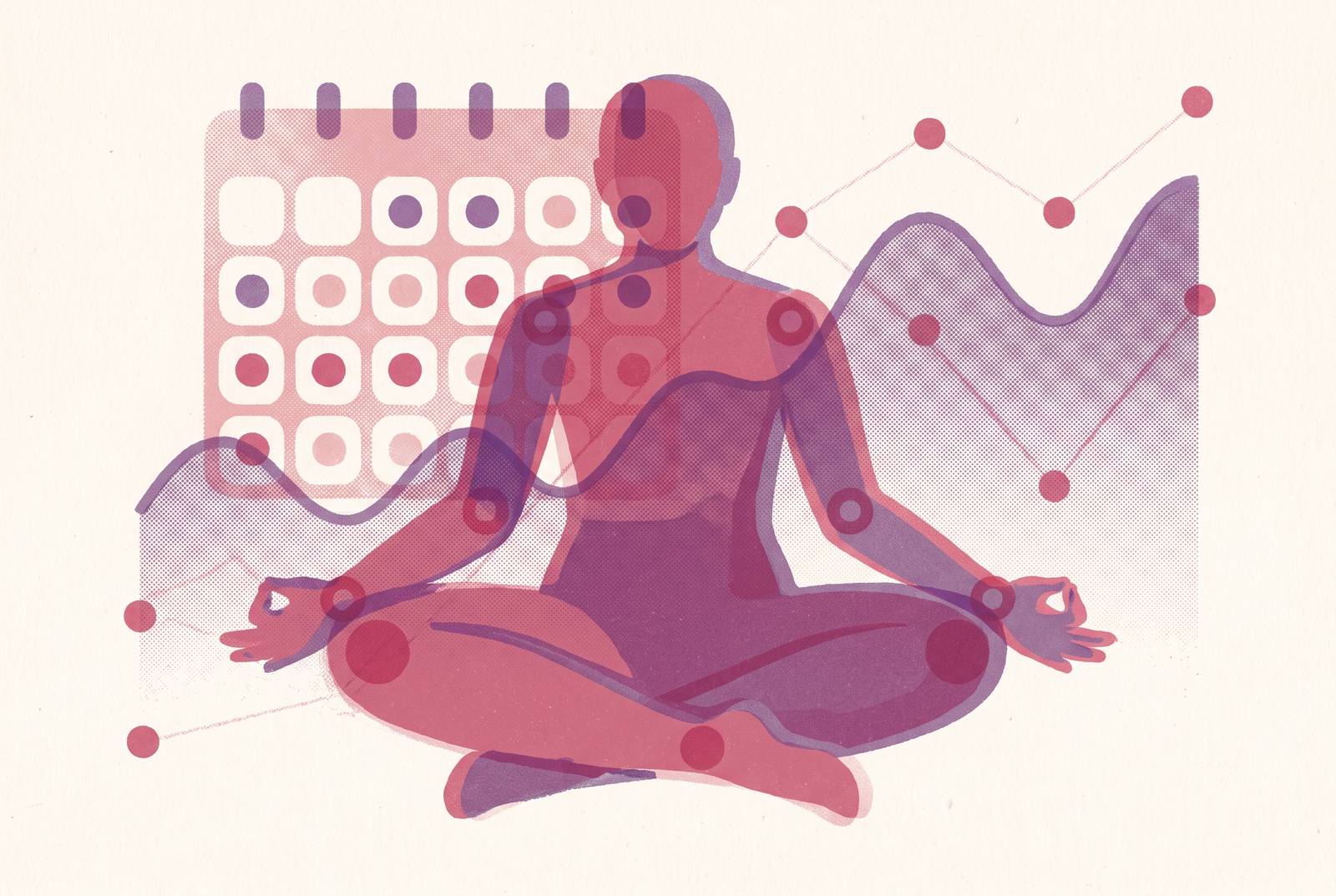
EDS is a connective tissue disorder whose effects extend across multiple organs and joints at once. It's a defect in collagen itself, the protein that holds skin, joints, blood vessels, and internal organs together, and when it's faulty, the effects appear almost everywhere at once. There are at least 13 recognized types, but hypermobile EDS accounts for roughly 90% of cases, and it's the version most people reading this are actually living with day to day. There's no cure for any of them. Penn Medicine and Mayo Clinic both frame treatment the same way: symptoms get evaluated and managed individually, because there's no single drug or procedure that fixes the underlying collagen problem. That makes symptom management the main clinical tool available, and tracking is what makes symptom management possible in the first place.
Look at what actually falls under the EDS umbrella: joint hypermobility and dislocations, chronic pain, fatigue, skin fragility, brain fog, and gastrointestinal issues, none of which operates in isolation. None of these sits in its own lane. A bad night of sleep changes next-day pain. A GI flare changes energy. Skin fragility and joint instability can trace back to the exact same collagen defect appearing in two different places. So logging one number for "pain today" tells a clinician almost nothing, because it strips out the context that would let anyone spot a pattern. The skill this article is really teaching is which categories to watch, and how those categories talk to each other, because that's where EDS tracking actually earns its keep.
The comorbidity web: why POTS, MCAS, and GI dysfunction belong inside any EDS tracking system
EDS, POTS, and MCAS frequently co-occur and their symptom overlap is substantial and clinically meaningful, though each can occur independently. The overlap in symptoms is substantial enough that it changes how a tracking log should be built from the start.
Dysautonomia, the broad category POTS falls under, affects a small fraction of a percent of the general population. Among people with hEDS, though, estimates for dysautonomia run from 31% up to 94%. That range is wide, but even the low end dwarfs the general population number, and it says something clear: if joints are loose because of a collagen defect, the nervous system's control over blood vessels often is too. MCAS follows a similar pattern. A Tufts University School of Medicine study, published in Allergy and Asthma Proceedings in May 2021 and built on 195 patient case histories, backed up that same connection. MCAS itself works through inappropriate activation of mast cells, dumping excess histamine and other inflammatory chemicals into the body. That produces hives, flushing, itching, and GI distress, symptoms that get mistaken for a standalone EDS flare more often than they should.
GI dysfunction deserves its own mention here as its own predictive relationship. Among EDS patients tested for dysmotility, a large majority turned out to have some form of it, and POTS specifically was an independent predictor of GI dysmotility. GI symptoms in someone with both EDS and POTS aren't a coincidence riding alongside the main condition; they're a downstream effect that should be tracked on their own terms.
The diagnostic label itself has been in flux. A 2023 study found that only a minority of people with a legacy hEDS diagnosis actually met the 2017 diagnostic criteria, with most reclassified under the broader hypermobility spectrum disorder (HSD) category. The Ehlers-Danlos Society's global criteria review, expected in 2026, may shift the definitions again. Many patients are carrying an uncertain or shifting label into appointments while dealing with the exact same day-to-day symptom load. It doesn't change what to track, but it explains why a good log needs to keep working even as the diagnosis on paper keeps moving. A tracker built only around joint pain misses the autonomic signals, the allergic reactions, and the GI patterns, and more importantly, it misses the cross-condition correlations that actually help a clinician make a decision.
The joint and pain log: what to capture beyond a number on a scale
What matters is location, type of pain (burning, stabbing, aching are different problems with different implications), duration, and which joint is involved. A knee that aches for two hours after standing tells a very different story than a knee that stabs sharply for thirty seconds during a specific movement.
Subluxations and full dislocations need their own entries too, separate from general stiffness or swelling. And the event itself is only half the data. Recovery time after a dislocation, how long it takes for the joint to feel normal again, often matters more clinically than how bad the dislocation felt in the moment. Cleveland Clinic identifies dislocation as the most common EDS complication, so tracking not just frequency but context, what activity preceded it, what the posture was, how tired the person already felt, can reveal patterns that actually inform physical therapy or bracing decisions.
Other documented symptoms, like back pain, joint popping, early-onset arthritis, and flat feet, deserve their own fields rather than getting folded into one generic "pain" entry. Collapsing them together erases the specificity that makes the log useful later.
Headaches belong in this section too, and they're easy to overlook. A 2024 paper in Frontiers in Neurology looked specifically at headache disorders in EDS and hypermobility spectrum disorders. Craniocervical instability, where the connection between skull and spine is looser than it should be, is a recognized EDS complication, which makes headache frequency, type, and severity a real clinical signal rather than an unrelated annoyance.
Autonomic and cardiovascular signals: the daily POTS monitoring routine
POTS has an actual diagnostic threshold behind it: in adults, heart rate has to climb by 30 beats per minute or more when moving from lying down to standing, without a drop in blood pressure (that would point to orthostatic hypotension instead), alongside chronic symptoms tied to standing. That threshold is why logging heart rate by position with a wearable isn't just data for data's sake, it's tracking against a real clinical benchmark.
Day to day, log dizziness, moments of near-fainting or actual fainting, heart palpitations, and lightheadedness specifically when standing up. Note the conditions around each episode too: time of day, hydration level, whether a meal came right before it. The gap between those readings is what actually reveals an orthostatic pattern, not any single value on its own. Temperature intolerance, running hot or cold more easily than most people, is another autonomic marker, and it often shows up alongside other flare signals rather than in isolation.
Dr. Brittany Goss, a rheumatologist at The EDS Clinic, told Rheumatology Advisor in 2025 that EDS management increasingly leans on better home monitoring. Heart rate data from a wearable isn't a novelty metric here, it's a legitimate input a clinician can actually use. For someone who already feels these symptoms daily, the shift is really about precision: logging position, time, and trigger alongside the number, instead of just noting that a bad dizzy spell happened.
MCAS trigger logging: turning reactions into a usable pattern
MCAS runs on a different data structure than joint pain does. The mechanism is mast cells firing off when they shouldn't, releasing histamine and other inflammatory chemicals, and the resulting symptoms, hives, itching, flushing, GI distress, can appear and disappear within minutes.
Anyone with MCAS has probably already started doing this informally, mentally noting "that happened after I wore perfume" or "that happened after dairy." Formalizing it just means writing down the food eaten, the environmental exposure (scent, chemical, sudden temperature change), or the physical stressor, right next to whatever reaction followed. Skin reactions and GI symptoms do double duty here. Skin reactions like rashes and GI symptoms like nausea serve double duty as both MCAS markers and standalone EDS/dysautonomia signals, and cross-referencing entries over time is how the distinction emerges. Wound healing time and how easily bruises show up are worth their own line item too, since both tie back to classic EDS skin fragility and MCAS-driven inflammation at once.
None of this means much as a single data point. One flushing episode after dinner tells a clinician nothing useful. A three-month log showing flushing after every meal containing a specific food group is a different thing entirely, that's evidence a doctor can actually act on.
GI, sleep, and fatigue: the domains that reveal how systems interact
Posture changes GI symptoms. For someone managing both EDS and POTS, GI discomfort is often noticeably worse while upright, because autonomic regulation isn't doing its job of managing blood flow and digestion the way it should. That makes body position at the time of a symptom a real data point.
Bloating, nausea, cramping, constipation, general motility problems, these all belong in the log, tagged with posture at onset. Sleep needs the same kind of specificity. A 2025 study in Med Sci (Basel) looked directly at sleep characteristics in people with EDS, and the takeaway is that hours slept isn't the variable that matters most. Quality, how often insomnia strikes, and whether sleep actually feels restorative are the numbers to write down. Someone can sleep a full eight hours and still wake up exhausted, because non-restorative sleep is its own distinct problem, separate from short sleep entirely.
Fatigue deserves the same granularity. Brain fog belongs alongside it: concentration, word-finding trouble, how slow mental processing feels, logged daily against sleep quality, activity level, and pain that same day.
None of these three domains, GI, sleep, fatigue, stands alone. Bad sleep makes fatigue and pain worse the next day. Autonomic dysfunction disrupts GI motility and sleep at the same time. A GI flare the night before often drives the next day's cognitive fog. Logging all three catches the correlations that appear when the domains sit next to each other on the same page. Fatigue should be logged on a 1–10 scale rather than a binary tired/not tired, because granularity is what makes it a tracking variable rather than a narrative complaint.
Energy tracking and pacing: logging spoons to avoid the boom-and-bust cycle
Anyone who's been told to just push through a flare knows how badly that advice tends to age. Spoon theory offers a better mental model: energy is a finite daily supply, and every task, eating, showering, reading, draws from it. The metaphor's popularity comes from how well it communicates something doctors and family members often don't intuitively grasp, that energy really does run out, and it isn't a matter of willpower.
That's a disproportionate crash in fatigue, pain, dizziness, brain fog, and sleep, one that ordinary rest doesn't fix. The boom-and-bust cycle follows a predictable shape: push past capacity, crash, force an extended rest, recover just enough to push again. Pacing exists to interrupt that cycle before it starts, keeping activity inside a sustainable range rather than recovering from a crash after the fact.
Logging for pacing looks a little different from symptom logging. It means noting estimated energy at the start of the day, then tracking what gets spent across physical, cognitive, and social categories, along with symptoms afterward and how long recovery actually takes. Over a few weeks, that data starts to sketch out a personal energy envelope, the real boundary of what a body can handle on an average day. Anticipatory logging matters just as much: write down planned demands the day before, such as a medical appointment, a hard conversation, or a long drive, next to the symptoms that show up the day after. That's often the only way to see that a two-hour appointment cost as much energy as a hike would have. Pacing is treated in the clinical literature as an evidence-based approach for energy-limiting conditions, but without a log, there's no baseline to pace against in the first place. Tracking isn't a nice-to-have companion to pacing; it's the mechanism that makes pacing possible at all.
Medications, supplements, and the polypharmacy log
Managing EDS alongside POTS and MCAS usually means managing a fairly long medication list at the same time. Beta-blockers show up often, including celiprolol, which received FDA Breakthrough Therapy designation in April 2022 specifically for vascular EDS. Antihistamines, low-dose naltrexone, and pyridostigmine are common too, alongside supplements like vitamin D, B12, iron, and magnesium.
For each one, the log should capture dose, timing, how effective it seems to be, and any side effects, especially where one medication shifts the baseline for something else being tracked. A beta-blocker that lowers resting heart rate, for instance, changes the number a POTS log is measured against, so without that note, a heart rate reading could look misleading months later. Dr. Goss's comments in Rheumatology Advisor specifically call out vitamin D, B12, and iron deficiencies as part of standard EDS management. Logging whether a supplement was actually taken, and at what dose, matters as much as logging the medications themselves.
Timing is where small gaps do the most damage to a log's usefulness. A medication taken at a different time of day, or a supplement missed for three days, can explain a symptom shift that would otherwise look random. Of every section in an EDS tracking system, this one tends to be the most immediately useful to a clinician.
Choosing a tracking tool that you will sustain
The best tracking system is the one that survives a bad flare week. Paper works for some people, a spreadsheet works for others, and a purpose-built app works well for anyone who wants reminders and trend charts without building them manually. Whether the categories above, joint and pain detail, autonomic readings, MCAS trigger pairs, GI and sleep and fatigue, energy spend, and medication timing, are all represented somewhere, even briefly, on the days that matter most, matters more than the format. A system built around quick entry on hard days will always outperform a detailed one that only gets used on good ones.
Sources
- Spotlight on the Management of Ehlers-Danlos Syndrome - Rheumatology Advisor
- Ehlers-Danlos syndrome
- Ehlers-Danlos Syndrome: Types of EDS & Treatment
- Ehlers-Danlos syndrome - Symptoms and causes - Mayo Clinic
- Frontiers | Neurobiological and neuropsychological disturbance in EDS
- The Road to 2026: New Criteria for the Diagnosis of Ehlers Danlos Syndrome | The EDS Clinic
- Gastrointestinal Disorders in Ehlers-Danlos Syndrome and POTS | The EDS Clinic
- The Overlapping Burdens of Fatigue and Daytime Sleepiness: Gender-Specific Impacts on Life Quality in Patients with Sleep Disorders - PMC